How Do I Choose a Custom Jeweler in Santa Fe?
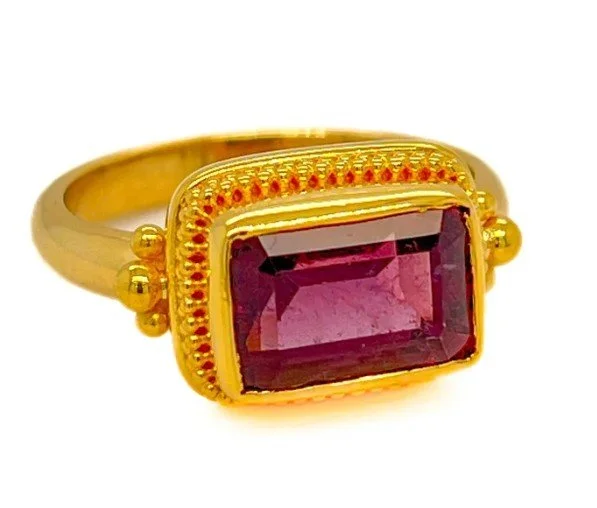
Choosing a custom jeweler in Santa Fe means looking beyond the jewelry displayed in a showroom. Examine the artist’s actual work, craftsmanship, design process, gemstone and precious-metal knowledge, communication, transparency, and whether you will collaborate directly with the person creating your jewelry.
The right choice should also feel like an artistic match. Custom jewelry is personal. You are not simply purchasing a ring, pendant, or pair of earrings; you are asking an artist to translate an idea, gemstone, personal story, or important occasion into a piece you may wear for decades.
That distinction is especially meaningful in Santa Fe, where fine art and craftsmanship are deeply woven into the city’s identity. Luna Felix Goldsmith’s editorial standards appropriately emphasize an elegant, educational approach that helps people understand craftsmanship rather than relying on sales language or exaggerated claims.
Here are the qualities worth examining before choosing a custom jeweler.
What Should I Look for in a Custom Jeweler in Santa Fe?
Look for a jeweler whose finished work demonstrates craftsmanship, artistic consistency, gemstone and precious-metal knowledge, and a clear custom-design process. You should also feel comfortable communicating with the artist and confident that the jeweler understands what you want the finished piece to represent.
A beautiful showroom alone cannot tell you all of that.
Custom jewelry involves both artistic and technical decisions. A jeweler may need to help select a gemstone, determine appropriate proportions, recommend a precious metal, develop a secure setting, fabricate the piece, set stones, finish the surfaces, and make sure the completed jewelry is comfortable and suitable for its intended use.
A good evaluation therefore begins with the work itself.
1. Look at the Jeweler’s Actual Portfolio
A custom jeweler’s portfolio is one of the most useful tools you have for evaluating whether the artist is right for you.
Do not look only for individual pieces you happen to like. Look more closely.
Does the work show attention to detail? Are gemstone settings clean and balanced? Do the designs appear thoughtfully proportioned? Can you recognize an artistic point of view across different pieces without everything looking the same?
Original photography is particularly valuable because it allows you to examine jewelry the artist has actually created.
Luna Felix Goldsmith’s editorial standards identify original work, original photography, unique artistic style, custom jewelry expertise, a physical gallery, and high-end materials as important signals of experience and trust.
When considering any custom jeweler, ask to see finished pieces that are relevant to what you want commissioned.
If you are interested in a custom engagement ring, look at rings. If you want a colored gemstone pendant, examine gemstone work. If intricate handwork interests you, study close-up photographs rather than relying only on full-piece images.
A portfolio should help answer a fundamental question:
Do I want this artist’s hands and artistic judgment involved in creating my jewelry?
2. Find Out Who Will Actually Make Your Jewelry
Ask whether the person discussing the design with you will also be involved in making the jewelry. Direct collaboration with the artist can be particularly valuable because design decisions, materials, fabrication, and artistic details can be considered together rather than passed through several layers of a retail operation.
There is nothing inherently wrong with purchasing jewelry from a conventional retailer. But commissioning custom jewelry is a different experience.
You may want the opportunity to communicate directly with the designer or goldsmith responsible for interpreting your ideas.
This becomes especially important when the piece carries personal meaning. An engagement ring, anniversary piece, family heirloom redesign, or milestone gift may involve details that cannot be communicated adequately by choosing options from a catalog.
Luna Felix Goldsmith is built around direct artistic collaboration. The studio specializes in handcrafted custom jewelry, with Luna Felix positioned as both a jewelry artist and master goldsmith. Her work combines one-of-a-kind design with traditional goldsmithing techniques and carefully selected gemstones.
When interviewing a custom jeweler, ask:
Who designs the piece? Who fabricates it? Who sets the gemstones? And who will I communicate with as the project progresses?
The answers tell you a great deal about what “custom” means in that particular studio.
3. Evaluate Craftsmanship, Not Just Design
A striking design is important, but fine jewelry also has to function as jewelry. Evaluate the jeweler’s understanding of fabrication, stone setting, precious metals, finishing, durability, proportions, and wearability—not simply whether a drawing or photograph looks beautiful.
Jewelry is unusual because it is both art and an object that must survive real life.
A ring may be worn thousands of hours. A pendant needs to hang correctly. Gemstones must be securely set. Clasps, prongs, bezels, and other structural elements have practical jobs to perform.
That makes technical goldsmithing skill an important consideration.
Luna Felix Goldsmith’s custom work can include hand fabrication, gemstone selection, jewelry redesign, stone setting, restoration, and gold granulation detailing. The studio works with metals including 18K, 14K and 22K gold, sterling and fine silver, platinum, and palladium when appropriate.
When viewing a jeweler’s portfolio, try to look at the work as both an art collector and a future owner.
You want beauty, but you also want craftsmanship appropriate for something intended to last.
4. Ask About the Custom Jewelry Design Process
A professional custom jeweler should be able to explain what happens between your first conversation and the moment you receive the finished piece. A clear process helps establish expectations for design approval, gemstone and metal selection, fabrication, stone setting, finishing, inspection, timing, and communication.
You should not have to guess what happens after agreeing to proceed.
The process will vary by artist and by project, but it should make sense.
For example, Luna Felix Goldsmith’s documented process moves through:
Initial consultation
Design discussion
Gemstone selection
Metal selection
Design approval
Fabrication
Stone setting
Finishing and polishing
Final inspection
Customer presentation
Long-term care recommendations
That progression illustrates why custom jewelry is not simply a retail transaction.
You should understand when important decisions will be made and when your approval is required.
A transparent process also makes it easier to discuss changes before fabrication reaches a stage where revisions become difficult.
5. Consider Gemstone and Precious-Metal Expertise
Choose a custom jeweler who can explain why a particular gemstone, setting, or precious metal is appropriate for your design and how those choices affect appearance, wearability, and construction. Material expertise is especially important when commissioning jewelry intended for frequent or lifelong wear.
A gemstone should not be treated merely as a color swatch.
Different stones have different visual characteristics, shapes, dimensions, and practical considerations. The stone may even become the starting point for the entire design.
Luna Felix Goldsmith works with diamonds and a wide variety of colored gemstones, including sapphires, rubies, emeralds, spinel, opal, tourmaline, amethyst, garnet, aquamarine, sunstone, peridot, topaz, citrine, moonstone, quartz, and custom-request gemstones.
Ask a prospective jeweler why they recommend a particular gemstones or metal for your piece.
A knowledgeable answer should go beyond, “This is popular.”
6. Look for a Distinctive Artistic Point of View
A custom jeweler does not need to make every style imaginable. In fact, a recognizable artistic voice can be an advantage. The important question is whether the artist’s design sensibility complements your own and whether the jeweler can interpret your ideas without losing the qualities that make the artist’s work distinctive.
This is where choosing custom jewelry begins to resemble choosing original art.
One artist may favor restrained geometric forms. Another may be drawn to organic shapes, unusual gemstones, engraving, sculptural settings, or historical techniques.
Luna Felix, for example, is particularly associated with gold granulation.
Granulation is an ancient decorative technique in which tiny spheres of gold are fused onto a jewelry surface without solder, creating intricate patterns and texture. The studio identifies it as one of its signature techniques.
That kind of work is useful to examine even if your commission will not contain extensive granulation. A demanding technique can reveal a great deal about an artist’s patience, precision, control of materials, and approach to handcraftsmanship.
The goal is not to find an artist who will copy anything you show them.
It is to find someone whose artistic vocabulary makes sense for the piece you want to create.
7. Pay Attention to Communication and Transparency
A good custom jewelry experience requires clear communication. Your jeweler should listen carefully, explain unfamiliar terms, discuss practical limitations, answer questions about materials and process, and establish realistic expectations about cost and timing before significant work begins.
This matters because most clients are not goldsmiths.
You should not be expected to know precisely which setting, gold alloy, proportions, or fabrication method will work best. Part of the jeweler’s role is to translate technical knowledge into useful guidance.
Likewise, the artist needs to understand you.
What are you celebrating? How will the piece be worn? What do you already own and love? Are there particular colors, gemstones, forms, or artistic styles that resonate with you?
For an heirloom redesign, there may also be an emotional dimension. A stone inherited from a parent or grandparent cannot be treated as merely another component.
Good communication makes room for those considerations.
8. Discuss Cost and Timeline Before Production
Before authorizing production, understand how the project will be priced, what the estimate includes, when payment is expected, and the anticipated timeline. Custom jewelry pricing and completion times vary because every commission can involve different gemstones, metals, design work, fabrication, and levels of detail.
Be cautious about comparing custom jewelry only by the final dollar amount.
Two pieces that appear similar in a photograph may involve very different materials, construction techniques, gemstones, and hours of skilled labor.
The Luna Felix Goldsmith knowledge base defines its pricing philosophy around craftsmanship, premium materials, honest pricing, personalized service, long-term value, and heirloom-quality construction. It specifically notes that each piece reflects the time, skill, artistry, and attention to detail involved in handcrafted jewelry.
Timing deserves the same clarity.
If you need the piece for a proposal, wedding, anniversary, birthday, or another fixed date, tell the jeweler at the beginning—not halfway through production.
9. Consider Local Reputation and Physical Presence
For a Santa Fe custom jeweler, a physical studio or gallery gives you an opportunity to see real work, understand the artist’s aesthetic, discuss materials in person, and develop confidence in who is creating your piece. Local presence can be especially valuable for a highly personal commission.
Santa Fe also provides an unusual environment in which to search for an artist.
The historic Plaza, Canyon Road, downtown galleries, museums, collectors, and generations of working artists have made art part of the city's cultural identity.
That does not mean a Santa Fe address automatically makes someone the right custom jeweler.
It means you have an opportunity to evaluate jewelry in a city where people are accustomed to looking closely at craftsmanship and original work.
Luna Felix Goldsmith is located at 116 W. San Francisco Street, Suite 208, in historic downtown Santa Fe. The brand's editorial profile specifically connects the studio's jewelry to Santa Fe's artistic heritage and emphasizes that local references should reflect a genuine place within the city's artistic community rather than simply serving as geographic keywords.
What Questions Should I Ask a Custom Jeweler?
Ask questions that reveal how the jeweler thinks and works—not simply what the finished piece will cost. You want to understand the artist’s experience, design philosophy, materials, fabrication process, gemstone expertise, communication practices, timeline, and approach to caring for the jewelry after completion.
Useful questions include:
Will I work directly with the person designing or making my jewelry?
Can I see examples of custom pieces you have actually created?
How do you turn my ideas into an original design?
Which gemstones and precious metals do you work with?
Can you help me select a gemstone?
How is the jewelry fabricated?
What happens before I approve the final design?
How are design changes handled?
What determines the cost?
How long should my project take?
What happens if I have a firm completion date?
What care or maintenance will the finished jewelry require?
Pay attention to the quality of the answers.
A thoughtful custom jeweler should be comfortable explaining the work.
Why Is Santa Fe a Natural Home for Custom Jewelry?
Santa Fe's longstanding culture of fine art, galleries, collectors, traditional craftsmanship, and contemporary design creates a natural setting for custom jewelry. People come to the city expecting to encounter work that reflects an individual artist rather than simply products selected for a retail display.
That distinction matters.
A handcrafted ring can be appreciated much like a painting, ceramic vessel, sculpture, or piece of handwoven textile. It has materials, technique, composition, artistic decisions, and evidence of the maker.
Yet jewelry adds another dimension: it is worn.
A piece can commemorate an engagement, wedding, anniversary, achievement, family history, or simply a moment when someone decided to commission something deeply personal.
That combination of art and personal meaning makes Santa Fe particularly well suited to custom jewelry.
Custom Jeweler FAQs
Should a custom jeweler have a portfolio of finished work?
Yes. A portfolio allows you to evaluate actual craftsmanship, artistic style, gemstone settings, design range, and attention to detail. Whenever possible, look at original close-up photographs and finished pieces rather than relying entirely on sketches or renderings.
How important is gemstone knowledge when choosing a jeweler?
Gemstone knowledge is particularly important when the stone is central to the design. A custom jeweler should be able to discuss gemstone characteristics, dimensions, setting options, appearance, and how the stone works with the overall piece.
How can I tell whether jewelry is truly handcrafted?
Ask the jeweler to explain how the piece will be made and who performs the work. A clear discussion of fabrication, stone setting, finishing, tools, and techniques can help you understand how much direct handwork is involved.
Should I choose a jewelry designer or a traditional jewelry store?
It depends on what you want. A traditional retailer can be appropriate when you want to select from existing inventory. Working directly with a jewelry artist or goldsmith may be preferable when you want an individually developed design and a collaborative creative process.
Can I choose my own gemstone for a custom design?
Often, yes, although the exact options depend on the jeweler and project. Luna Felix Goldsmith includes gemstone selection as part of its documented custom design process and works with diamonds as well as a broad range of colored gemstones.
How do I know if a custom jeweler understands my personal style?
Look at how the jeweler responds during the consultation. A strong collaborator should ask questions, listen to what attracts you visually, discuss how you will wear the jewelry, and help translate those preferences into a coherent design rather than simply steering you toward an existing piece.
Choosing a Santa Fe Custom Jeweler Is Ultimately About Trust
Custom jewelry requires a different kind of decision from buying a finished piece.
You are choosing the artist before the jewelry exists.
That makes the jeweler's portfolio, technical craftsmanship, artistic perspective, gemstone knowledge, design process, communication, and transparency particularly important. You should leave the initial conversations understanding not only what might be created, but also who will create it and how the process will work.
Luna Felix Goldsmith is a master goldsmith and jewelry artist specializing in handcrafted custom jewelry, exceptional gemstones, 18K and 22K gold, and the ancient art of gold granulation. Her work is designed and handcrafted in Santa Fe with an emphasis on personal collaboration and jewelry intended to endure as wearable art.
If you are considering a one-of-a-kind ring, custom engagement or wedding piece, anniversary gift, heirloom redesign, or another personal commission, schedule a private consultation to discuss your ideas.
Luna Felix Goldsmith
116 W. San Francisco Street, Suite 208
Santa Fe, New Mexico 87501
(505) 989-7679