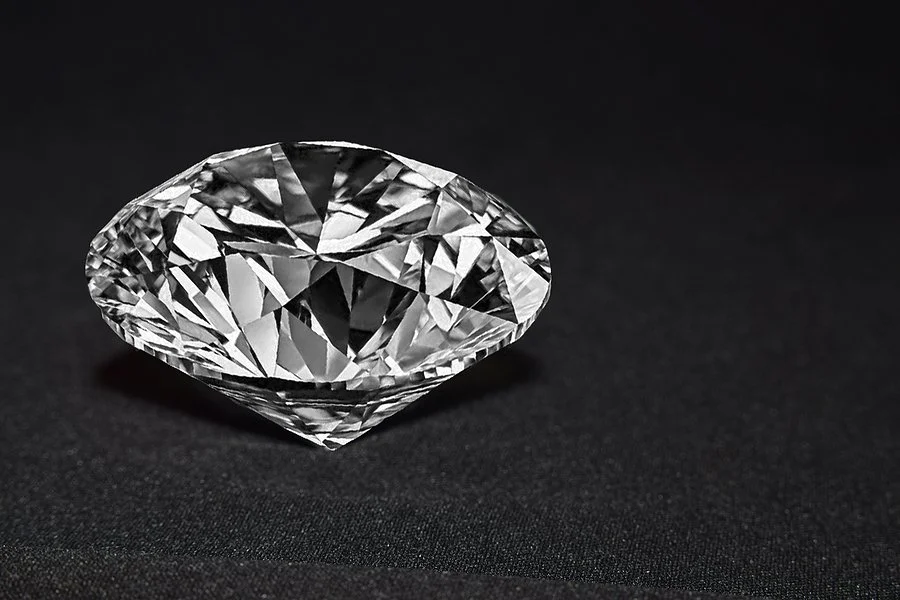
Lab-Grown Diamonds vs Natural in Custom Jewelry Value
The rapid rise of lab-grown diamonds has completely transformed the modern jewelry landscape, sparking an important debate among collectors and fine jewelry enthusiasts. On paper, the appeal is obvious: lab-grown diamonds possess the identical chemical, physical, and optical properties of their mined counterparts, but come at a fraction of the price.
However, as consumers look to design bespoke heirlooms, a critical question arises: how do these manufactured stones impact the long-term investment value of a custom piece? To navigate this choice, it is essential to understand the fundamental difference between upfront cosmetic value and long-term secondary-market asset retention.
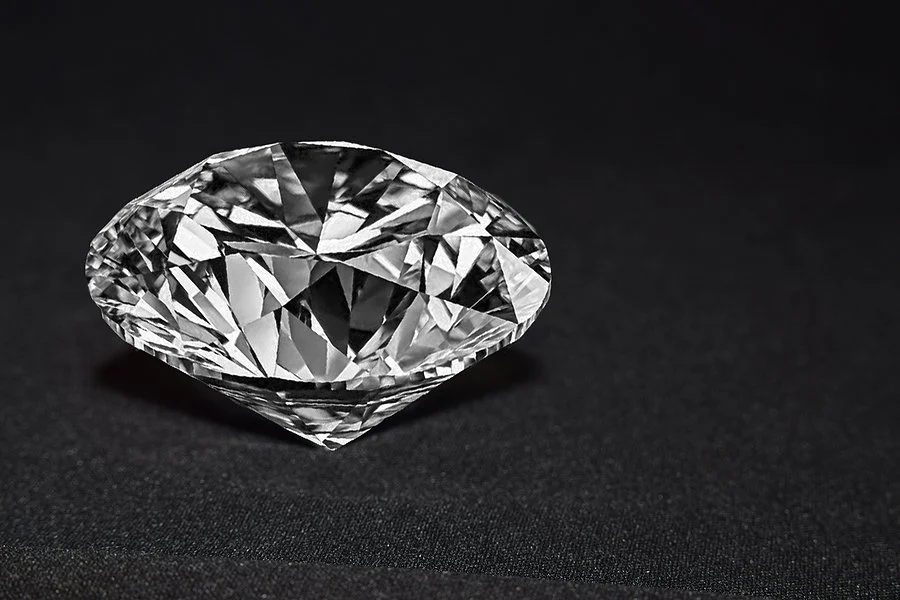
Lab-Grown Diamonds vs Natural in Custom Jewelry Value
The rapid rise of lab-grown diamonds has completely transformed the modern jewelry landscape, sparking an important debate among collectors and fine jewelry enthusiasts. On paper, the appeal is obvious: lab-grown diamonds possess the identical chemical, physical, and optical properties of their mined counterparts, but come at a fraction of the price.
However, as consumers look to design bespoke heirlooms, a critical question arises: how do these manufactured stones impact the long-term investment value of a custom piece? To navigate this choice, it is essential to understand the fundamental difference between upfront cosmetic value and long-term secondary-market asset retention.
Cosmetic Value vs. Asset Retention
Lab-grown diamonds offer an undeniable advantage for buyers prioritizing immediate visual scale. They allow you to maximize your budget, securing a significantly larger, visually flawless stone for the same price as a smaller natural diamond.
The critical caveat, however, lies in market supply and rarity. Because lab-grown diamonds are manufactured in commercial laboratories using advanced technological processes, their supply is virtually infinite. As production technology becomes more efficient, the cost to create lab-grown diamonds continues to plummet year after year. Consequently, a synthetic stone lacks secondary-market resale value; if you attempt to sell a lab-grown diamond down the road, you will find very little demand on the estate market.
Natural diamonds, by contrast, are a finite geological resource formed over billions of years deep within the earth. This inherent rarity is why natural stones remain the premier choice for retaining measurable, long-term asset value.
Structuring a Smart Custom Investment
When commissioning a custom piece with a master studio like Luna Felix Goldsmith, your jewelry should be viewed as a cohesive repository of value. A smart custom investment balances the choice of stones with the undeniable intrinsic worth of the metals surrounding them.
Lab-Grown Choice: [Infinite Supply / Low Resale Stone] + [High-Value High-Karat Precious Metal]
Natural Choice: [Finite Supply / Asset Retention Stone] + [High-Value High-Karat Precious Metal]
By choosing natural gemstones, you ensure that both the center stone and the hand-forged setting move together as tangible assets. However, if you prefer the cosmetic benefits of a large lab-grown diamond, working with an elite studio like Luna Felix Goldsmith becomes even more vital.
When a synthetic stone is set into heavy, substantial 22-karat gold or accented with old-world granulation, the masterful benchwork and high-purity precious metals provide a rock-solid baseline of physical and artistic value. The custom craftsmanship itself ensures the piece behaves as an irreplaceable heirloom, balancing out the depreciating nature of a manufactured stone.
The Artisan Premium: Master designers like Luna Felix Goldsmith elevate fine jewelry into the realm of fine art. When a rare natural stone or a carefully chosen premium gem is married to meticulously hand-alloyed gold, the resulting one-of-a-kind original commands a distinct premium among collectors that mass-produced retail pieces simply cannot replicate.
Frequently Asked Questions
Why do natural diamonds retain their resale value over time while lab-grown diamonds do not?
Natural diamonds are a finite, rare commodity formed over billions of years, which maintains steady global demand on the secondary and estate markets. Lab-grown diamonds, conversely, can be mass-manufactured in unlimited quantities as technology improves, leading to a continuous drop in their market value and negligible resale potential.
Can a custom piece featuring a lab-grown diamond still be considered a good financial investment?
Yes, provided that the setting is handcrafted from high-purity, substantial precious metals by a prestigious studio like Luna Felix Goldsmith. While the synthetic stone itself will not hold resale value, the intrinsic weight of the high-karat gold and the unique artistic value of the custom benchwork ensure the piece retains material worth.
How does the purity of gold affect the overall value retention of custom jewelry?
Higher purity levels, such as the rich 22-karat gold utilized by Luna Felix Goldsmith, contain a significantly higher percentage of pure precious metal than standard commercial 14-karat alloys. This exceptional purity directly ties the baseline value of your custom jewelry to the global commodities market, offering superior raw material wealth retention.
Craft An Heirloom Jewelry Piece with Enduring Worth
Deciding between the immediate cosmetic allure of lab-grown stones and the timeless, finite rarity of natural gems requires a clear understanding of your long-term goals. Whichever path you choose for your stones, your setting deserves the absolute highest level of physical durability and artistic excellence.
Invest in a masterpiece that honors your capital and your personal legacy. Explore the breathtaking portfolio online at lunafelixgoldsmith.com, or call Luna Felix Goldsmith at 505-989-7679 today to schedule a design consultation at their Santa Fe studio and select the perfect, value-retaining materials for your next custom heirloom.

What Important Facts Do I Need to Know About Lab Grown Diamonds?
A diamond that's termed ‘synthetic’ and professionally grown in a lab wouldn't, strictly speaking, dovetail with your ideas of romance. But spend a couple of minutes getting to know Lab Grown Diamonds. You might be surprised with this one.

Lab Grown Diamonds have become increasingly popular in recent years and can be a great option when considering purchasing a diamond engagement ring. But then again, the concept might sound a little suspect.
A diamond that's termed ‘synthetic’ and professionally grown in a lab wouldn't, strictly speaking, dovetail with your ideas of romance. But spend a couple of minutes getting to know Lab Grown Diamonds. You might be surprised with this one.
We’re just used to the notion of a Natural Diamond.
It’s the way people have done things for thousands of years and there’s something really appealing to me about the commitment and the familiarity that comes with selecting a Natural Diamond.
Here’s what to think about when choosing between lab created diamonds vs natural.
What is a Lab Grown Diamond?
A lab-created diamond is one that is made in a laboratory setting. Scientists can now produce a diamond that visually looks like a diamond mined from the earth, has the same chemical and physical properties and can even be certified by GIA and made from of popular methods like Chemical Vapor Deposition (CVD) or High-Pressure High Temperature (HPHT).
Are Lab Diamonds Real?
Oh yes. Lab Grown Diamonds are real diamonds just as those that come from the earth.
They are graded for shape, size, color and clarity just as natural diamonds. Both of these Natural & Lab Grown Diamonds are of the exact same physical and chemical properties and both are accompanied by diamond certifications.
Lab Diamonds vs. Natural - What do the Experts Say?
To the naked eye, Natural Vs. Lab grown Diamonds are identical and have the same hardness and durability.
In 2018, the Federal Trade Commission acknowledged Lab Diamonds to be real.
But do lab created diamonds test as real? Yes.
In fact, The Gemological Institute of America, (GIA) “has been grading laboratory-grown diamonds since 2007.
Effective July 1, 2019, GIA Laboratory-Grown Diamond Reports and Identification reports no longer use the term “synthetic.”
The GIA Laboratory-Grown Diamond Report describes key characteristics of the laboratory-grown diamond with a plotted diagram, and includes a microscopic laser inscription on the girdle of the diamond for identification.
Lab Made Diamonds
Lab Diamonds vs. ‘Real’ Diamonds – What is the Difference?
Natural diamonds have minuscule nitrogen and Lab Grown Diamonds do not have any nitrogen. This is one of the markers gemologists are looking for when trying to tell whether a diamond is natural or lab grown.
Natural diamonds are created under the earth’s crust over millions of years, and then they are mined, cut and polished. A man made Diamond is subjected to the same conditions – in a laboratory!
Actually, the way Lab Grown Diamonds are made is a different type of intervention in nature and it reduces the grow time from millions of years to few months. Next, the Lab Diamond is cut and polished.
How are Lab Grown Diamonds Created?
Lab Grown Diamonds are also commonly known as man-made, synthetic, cultured or artisan. The interchangeable language can be confusing to a consumer.
However what each term is referring to is the same certified diamond, one that has been ‘grown’ in a Lab. Although on occasion you may hear Lab Grown Diamonds also referred to as CVD or HPHT – all this is doing is recognizing the method used to produce the diamond!
Lab Grown Diamonds are produced using either:
CVD Method
The initial process is chemical vapor deposition (CVD). A small diamond seed, called a “seed crystal,” is inserted inside a small chamber. Then the heated gases fill the chamber. As the gases get hot enough, layers of carbon start to build up on the seed crystal. The seed then grows into a square diamond crystal.
HPHT Method
The next process is High Pressure High Temperature (HPHT). This is designed to mimic the earth’s Natural Diamond making process. This natural graphite is then loaded onto a massive machine that crushes it under extreme pressure and high temperatures. Now the graphite becomes a diamond.
CVD vs HPHT Diamonds - What's the Difference?
With the naked eye you can’t distinguish a CVD diamond from an HPHT diamond. Both processes produce a real diamond that is chemically and physically quite similar to natural diamonds.
When it comes to grading Lab Grown Diamonds, the same 4 Cs: Color, Cut, Clarity and Carat are applied.
Just like the argument of Natural Diamond vs Lab Grown, the argument of which process is ‘better’ is complex. An experienced Jeweler can help you navigate these waters.
Are Lab-Grown Diamonds Good?
The answer is Yes.
A perfect cut, internally FLAWLESS diamond is very expensive and very rare regardless of whether it is a Lab Grown Diamond or a Mined Diamond.
Lab Grown Diamonds naturally contain different degrees of internal “inclusions” which are compared to fingerprints, and are therefore referred to, and graded by reputable gemological labs.
Lower Clarity-Graded Lab Grown Diamonds may have inclusions visible to the naked eye. The cut & color also plays a large role in the overall quality of a diamond as to whether it is excellent, very good, good, or poor.
Advantages of purchasing a Lab Created Diamond
Lab Created Diamonds cost around 30-50% less then Natural Diamonds, and can typically be 30-50% larger for the same budget, giving you a larger and a more brilliant stone.
The difference is indistinguishable to the naked eye when comparing a Lab Grown Diamond to a Natural Diamond of equivalent 4 C's attributes.
Lab Grown Diamonds possess the same physical, chemical and optical properties as Natural Diamonds, your stones will sparkle with all their glory.
Is Lab Grown More Ethical? Those who prefer Lab Grown Diamonds believe that the gemstones are more ethical as they suffer from no negative mining practices. But The Kimberley Process which was established in 2003, has indeed kept conflict diamonds at bay.
If you are not so much interested in the resale value of the diamond, then a Lab Grown Diamond is a great option to have to buy instead of a more costly Natural Diamond. In layman terms it’s called getting more bang for your buck.
Cons of purchasing a Lab Grown Diamond
A natural diamond comes in a rarity.
Overall, a natural diamond does better holding it's value than lab created, because there's finite supply. The law of supply and demand, it is presumed, operates as we learned in Econ 101, where increasing demand and a relatively fixed supply pushes up the value of the asset.
Some Real Grown Diamonds can be made; they might not be a good investment (because of this same value retention), and resale prices might continue to fall as the market becomes saturated.
A Lab Grown Diamond avoids the environmental and ethical problems associated with mining Natural Diamonds, but there are sustainability concerns with Lab Grown Diamonds too. A HPHT processed diamond hogs lots of energy…because you need a lot of heat to make a diamond. This CVD process uses as much energy as to power a home for month.
GIA Certified Man Made Diamonds
The GIA (Gemological Institute of America) is recognized as the leading authority in diamond certification worldwide. What is a Lab Grown Certified Diamond?
Because a Lab Grown Diamond is identical chemically to a natural Diamond, you will also receive this certificate.
GIA-certified diamonds are a coveted supply in the jewellery trade, signifying precision and accuracy in the grading of diamonds.
The GIA certification of lab-created diamonds (LG) starts with the submission of the stone then a comprehensive analysis by trained gemologists. The diamond's physical properties, such as carat weight, color, clarity, and cut, are evaluated in detail and identified with the aid of specialized features to ensure accuracy.
With the introduction of a high-quality report, complete with a GIA grading, for lab-grown gems, GIA will help consumers understand what they’re buying with the same information they can use to make a choice about a natural diamond, instilling confidence in the value of those products in the market.
Should I Get a Man Made Diamond Engagement Ring?
When picking a Lab Grown Diamond VS a Natural Diamond, there is no one right or wrong answer. The question is entirely up to you.
Take into account whether you care about resale value, your significant other’s preference and your budget.
Not sure about your decision?
Luna Felix Goldsmith are here to support you through these decisions. Please call (505) 989-7679, or E-Mail us using the online CONTACT US FORM for further details.