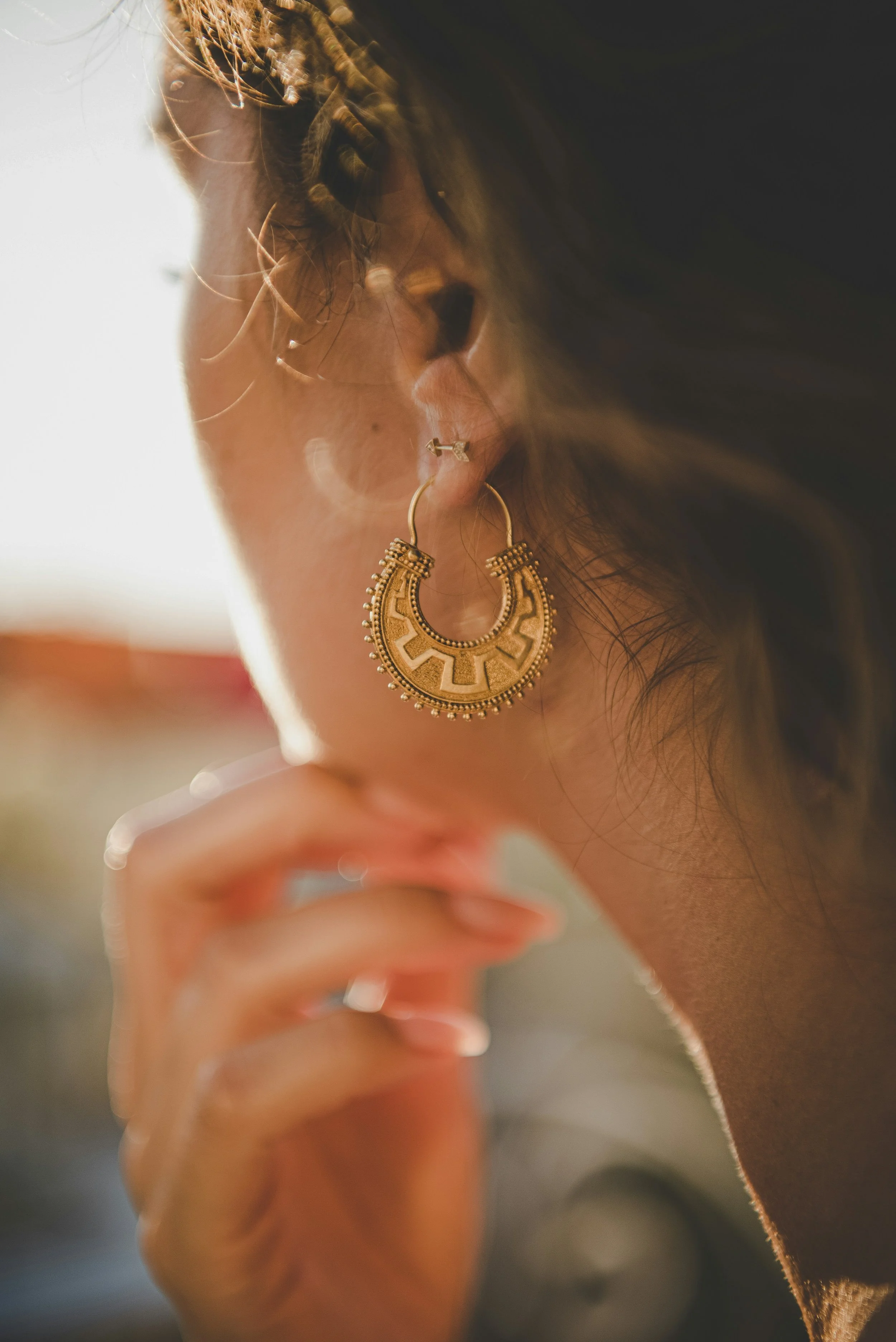
When Were Earrings First Worn in Human History?
Earrings have been worn for thousands of years in many different parts of the world. Ear piercings are among the oldest recorded body modifications in history. Men and women of all social classes have worn earrings by various cultures throughout history.
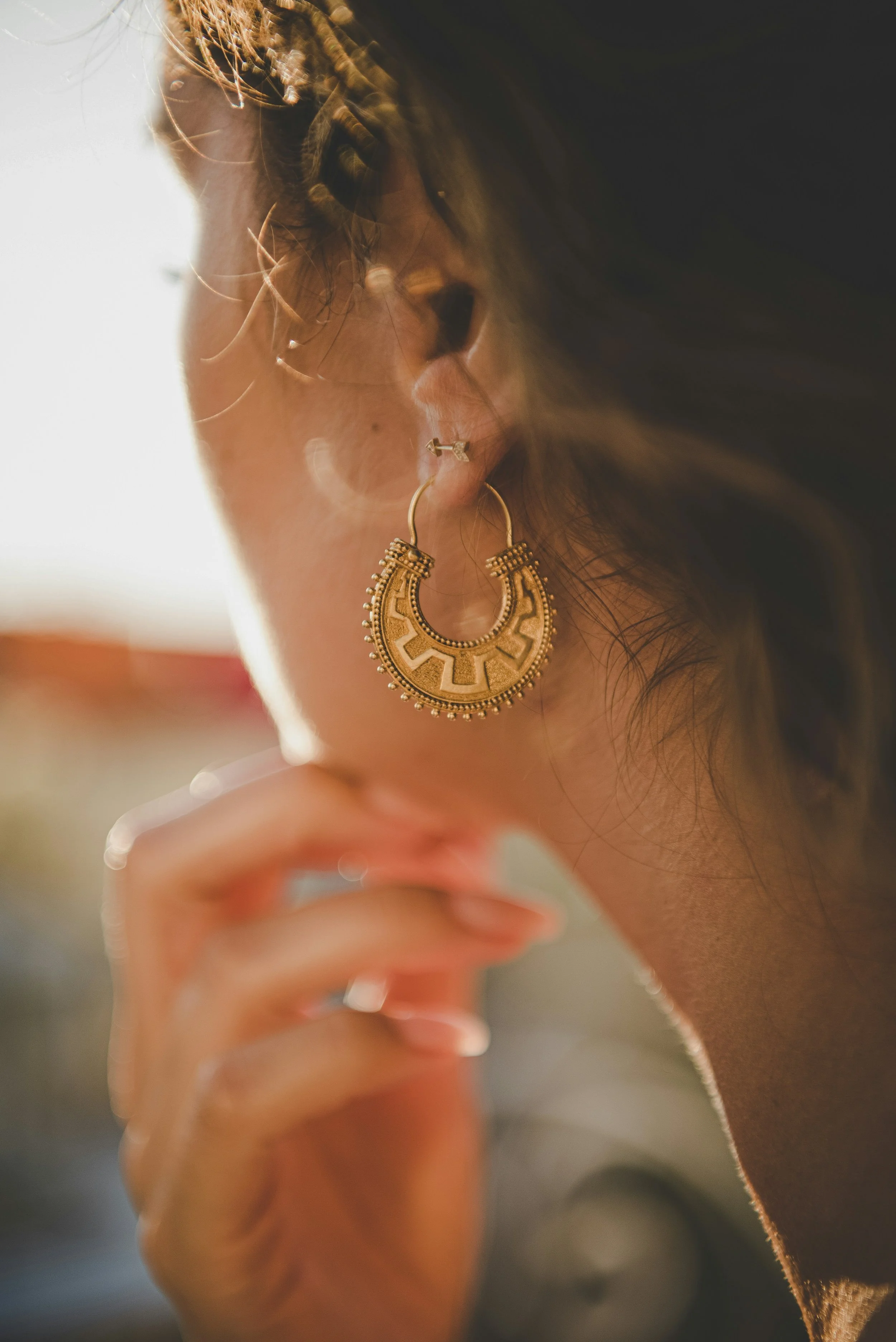
Earrings have been worn for thousands of years in many different parts of the world. Ear piercings are among the oldest recorded body modifications in history. Men and women of all social classes have worn earrings by various cultures throughout history.
Ancient Civilizations
Gold, carnelian, and lapis lazuli are common materials among Sumerian earrings from 2600 BCE, although older examples most certainly exist but have not been preserved.
Earrings made from gold, silver, and bronze can be seen in the Minoan civilization on the island of Crete which was active from 3,000 to 1,100 BCE.
The Aegean, a golden age civilization of Bronze Age Greece demonstrates that hooped earrings were a favorite fashion as can be seen by the richness and variety of them in this great culture. It is safe to say that the piercing was indeed in men’s ears by frescoes showing warriors wearing earrings as these and other archaeological evidence date back to Ancient Persia.
Tutankhamun’s tomb, discovered in 1922, indicated that although the ancient king wasn’t wearing earrings, he did have pierced earlobes. Earrings were found in his tomb, so it is most likely that he did wear them.
Examining his tomb, researchers also discovered that holes had been made in the ears of burial masks and were covered by golden discs. Howard Carter, the archaeologist that discovered it, suggests this indicates children wore earrings in Ancient Egypt and not adults. This aspect is manifested with the fact that it's still common in Egypt (or at least until very recently) for earrings to be only worn by children.
From the Biblical sources, such as the Exodus, I know that earrings were worn in the ancient civilizations. For instance, Exodus seems to mention earrings belonging to children. In Greece and Rome, by the classical period, earrings were places commonly in the ears of women. I also learned that men wearing an earring was an oriental practice.
This is correct as one source indicates that many Ainu men and women in Japan had earrings. However, by the 19th century, the ears of all Ainu men were cut off.
The History of Earrings in England
During the late 1500s, the time of the English Renaissance, earrings became the fashion for gentlefolk of any sex. Ear piercings also had meaning for men that were sailors; a pierced lobe meant they had sailed the equator or around the world at that point. Sometime after that, it seems that earrings became once more solely a woman’s accoutrement. A woman of a certain status would wear earrings daily, but it was not in vogue or dignified for a man. However, in the 20 th century, men began wearing them again. In the 1960s, though, a man’s right lobe being pierced indicated homosexuality.
Western Europe was certainly not a safe place to be openly gay in the 1960s, so coded clothes existed. Today, it is fashionable to see both men and women creating holes in their earlobes to fit with various earring types.
The ‘punk’ subculture had adopted ear piercing as a symbol of defiance by the mid-80’s and it was also popular to get every part of the ear pierced, not just the lobe. An extension of this counterculture movement reached fruition in the late-90s/early-00s when young’uns started stretching out their earlobes outward from a lobe pierce.
Even today, lobe piercing is the most popular type of ear piercing. Common types of earrings are the studs, hanging earrings and ears like people who want to wear a jewelry that does not have their ear pierced.
What do Earrings Symbolize?
Some of the meanings behind earrings have been answered but there are multiple roads to travel down. In early Christian culture, earrings were a clash of the Christian faith, men felt that to alter one’s body was in doing so changing God’s divine creation.
Similarly, in Buddhism, images of the Buddha always have a stretched earlobe or ears with no jewelry at all as it is said that before he became Buddha (or Enlightened One), his lobes were weighed down by his heavy earrings and he removed them when renouncing worldly life to become a monk and devote himself fully to his spiritual path.
Old Romans, however graduated from using engraved golden earrings as a form of signifier to their favored political leaning, in the same way you or I might wear pin badges or have stickers on our cars or windows. Long, heavy earrings made of plain or engraved gold in ancient times were used for financial status and to show one's power.
Nowadays, earrings are not as a product to identify oneself with whatever category and trait one is associated with—whether Dutchy or punk rock – all exemptions applied They were, however, closely related to the culture in which one lived at that time.
The Purpose of Earrings
It can be all too tempting to dismiss earrings as being quite frivolous but – and the crux of the matter is – they actually have no purpose at all, except decoration that is.
In Ancient Persia (perhaps the earliest known civilization to have adorned themselves with earrings), soldiers shared a similar belief soldiers and sailors wore golden earrings as a symbol of their courage, in hopes that they would be protected by the gods during battle. Following this line of logic, other ancient civilizations such as Rome and Greece sported earrings with the idea that metal could ward off demons - a popular theory was that demons entered through the ears to get into peoples brains.
Gold earrings were also the second currency in multi-cultural applications, for example among sailors. Should any of the soldiers die at sea and be washed ashore they were to use their gold earrings for a decent burial. A pair of earrings bore engravings detailing the hometowns of soldiers whose bodies were to be repatriated for burial.
These steps are not necessary in today's world as earrings are primarily worn for their jewelry sound and visual appearance including piercings in areas of the ear that may alleviate chronic headaches and nausea.
The History of Hoop Earrings
When discussing the usage of earrings by early civilizations, almost all examples discovered have been hoop earrings of varying sizes. Though studs are seemingly more prevalent now, hoops were in fact worn first. It’s not just sailors who had hoop earrings on; even rulers did, and beyond this all the way to the 18th century there have been representations of rich people wearing hoop earrings.
Indeed, throughout the 20th century, women of color greatly popularized hoop earrings. From Josephine Baker in the early 20th century to Jennifer Lopez and Selena Quintanilla in the 1990s — as well as women across the spectrum of color — large hoops have been a stylistic staple for many women over the course of both 20th and 21st centuries.
The History of Stud Earrings
Stud earrings were not so much a style as a necessity until recently. During the time of Queen Victoria to around the fifties, ear-piercing had gone out of fashion, and was considered something only for men and sailors.
Clip-on earrings became all the rage instead of stud earrings. There are so many old/vintage clip-on earrings, and this is why. In the latter of the 20th century earlobe piercing again became popular among women as well and fashion forward young ones had "piercing parties".
Piercings and body modifications go a long way back within human history, from the frozen body of a 5,000 year old man found in Alps of Italy with pierced ear lobes to young people today who tend to have one (or more) earring in their ears. Ear piercing has been practised all over the world since ancient times.